Governing the Ungovernable: How Federal Agencies Are Falling Behind Autonomous Technology—and What Operators Must Do Now
The Gap Between What Machines Can Do and What the Law Permits
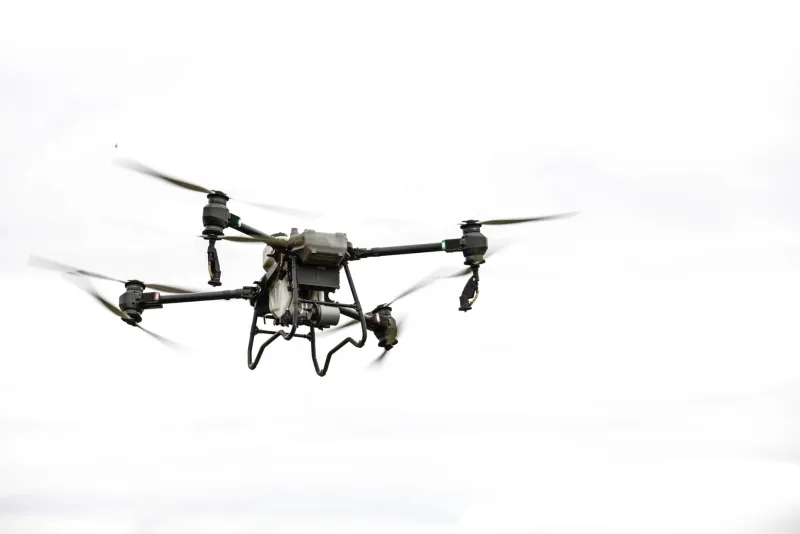
In laboratories, warehouses, and flight test corridors across the United States, autonomous systems are performing tasks that existing federal regulations simply never anticipated. Drones equipped with onboard AI can now navigate complex environments, identify anomalies, and make real-time operational decisions without a human hand on the controls. Ground robots coordinate with one another across factory floors using algorithms that update faster than any compliance manual. Yet the rulebooks governing these capabilities—maintained by the FAA, FCC, and OSHA—were largely drafted in an era when autonomy meant a preprogrammed flight path, not a machine learning model making independent choices.
This is the regulatory lag problem, and it is not a minor inconvenience. It is a structural feature of how innovation and governance interact, and for professionals operating in the drone and robotics space, understanding it is essential to long-term viability.
Why Agencies Struggle to Keep Pace
Federal rulemaking is, by design, a deliberate process. The Administrative Procedure Act requires public notice, comment periods, and extensive review before new rules take effect. For industries that move on decade-long cycles, this cadence is workable. For autonomous technology, where meaningful capability shifts can occur within eighteen months, it creates a persistent mismatch.
The FAA's Part 107 framework—the backbone of commercial drone regulation in the United States—was finalized in 2016. At that time, beyond-visual-line-of-sight (BVLOS) operations were largely theoretical for commercial operators. Today, BVLOS is the foundation of drone delivery, infrastructure inspection, and agricultural monitoring at scale. The agency has issued waivers and is working through its BEYOND program and the Advanced Aviation Advisory Committee, but a comprehensive, standardized BVLOS operating framework remains a work in progress. Operators who need to fly BVLOS commercially today must either secure individual waivers—a process that can take months—or accept significant operational constraints.
OSHA faces a parallel challenge on the ground robotics side. Its existing standards for industrial machinery were written with fixed, predictable equipment in mind. Autonomous mobile robots that share workspace with human employees introduce variables—dynamic routing, sensor-based decision-making, machine-to-machine communication—that existing lockout/tagout and machinery guarding standards address only imperfectly. The agency has issued guidance documents, but binding rules specifically tailored to collaborative and autonomous robotics remain largely absent.
The FCC's role is less visible but equally significant. As drone swarms and robot fleets increasingly rely on spectrum-intensive communications—including the 5G frequencies that enable low-latency command and control—spectrum allocation and interference management rules have struggled to accommodate the density and nature of these new use cases.
Technologies Currently Operating in Regulatory Limbo
Three categories of autonomous capability stand out as particularly exposed to regulatory uncertainty right now.
Beyond-Visual-Line-of-Sight Autonomy. The most commercially consequential gap. While the FAA has approved limited BVLOS operations in controlled environments, no universal standard exists for routine commercial BVLOS flights. Operators in this space must engage directly with the FAA's waiver process and, increasingly, with the Remote ID framework—which, while now mandatory, was designed primarily for identification and accountability, not as an enabler of expanded operational authority.
AI-Powered Autonomous Decision-Making. When a drone or robot makes a consequential operational decision—rerouting around an obstacle, flagging a structural defect, or altering a delivery path—liability frameworks become murky. No federal agency has issued comprehensive guidance on how responsibility is allocated when an AI system's decision leads to an incident. For operators deploying AI-driven platforms commercially, this ambiguity represents genuine legal exposure.
Swarm Coordination. Operating multiple autonomous vehicles as a coordinated system introduces questions that existing regulations treat as edge cases at best. Who holds the operating certificate for a twelve-drone inspection swarm? How does Remote ID apply when vehicles are operating in tight formation? These are not hypothetical questions—they are being asked right now by operators who have the technology to deploy swarms but lack a clear regulatory pathway to do so at commercial scale.
What Compliance Experts Are Watching
Regulatory professionals who work at the intersection of aerospace and technology law point to several developments worth monitoring closely.
The FAA Reauthorization Act, most recently renewed in 2024, contains directives to the agency regarding BVLOS rulemaking timelines and the integration of uncrewed aircraft systems into the national airspace. Observers note that congressional pressure has historically been one of the more effective accelerants of FAA action, and the current legislative environment reflects growing recognition that the United States risks ceding commercial leadership in autonomous aviation if rulemaking does not advance.
On the robotics side, OSHA has been gathering data through its National Emphasis Programs and through stakeholder engagement with major logistics and manufacturing operators. Legal advisors working with industrial clients suggest that a formal rulemaking addressing autonomous and collaborative robots is more likely in the next three to five years than at any prior point—but that the timeline remains genuinely uncertain.
For operators, the practical implication is that the regulatory environment will change, and those changes are more likely to expand operational permissions than to contract them—provided the industry demonstrates a credible safety record in the interim.
A Roadmap for Professionals Navigating the Frontier
The regulatory lag is not simply a problem to endure. For well-prepared operators, it represents a window of competitive differentiation. Here is how to approach it strategically.
Engage with the rulemaking process directly. The FAA, FCC, and OSHA all publish Notices of Proposed Rulemaking and solicit public comment. Operators who participate in these processes—particularly those who can provide real-world operational data—shape outcomes in ways that matter. Industry associations such as AUVSI and the Commercial Drone Alliance provide organized channels for this engagement.
Build compliance infrastructure now, not after the rules arrive. Organizations that have already implemented robust data logging, remote identification compliance, AI decision audit trails, and worker safety protocols for human-robot interaction will be positioned to demonstrate compliance rapidly when new rules take effect. Those who wait will face a compressed and costly transition.
Pursue voluntary standards as a bridge. ASTM International, the American National Standards Institute, and similar bodies have developed voluntary standards for drone operations and robotic safety that frequently anticipate formal regulation. Adopting these frameworks signals operational maturity to clients, insurers, and regulators alike.
Consult aviation and technology counsel proactively. The cost of legal guidance before an incident is a fraction of the cost after one. As AI-driven autonomy and BVLOS operations become more central to commercial operations, having counsel familiar with both the current regulatory state and the direction of travel is no longer optional.
The Competitive Dimension
There is a less-discussed dimension to the regulatory lag problem that deserves acknowledgment: the operators who understand where the frontier lies, and who have built operational capabilities that are ready to scale the moment new permissions are granted, will move faster than competitors who are still reading the new rules when they publish.
This is not a call to operate outside legal boundaries. It is a recognition that regulatory preparation is itself a form of competitive intelligence. The professionals and organizations that are already flying BVLOS under waiver, already deploying AI-assisted inspection platforms, and already coordinating multi-robot systems within current permissions are accumulating the operational experience and institutional knowledge that will be most valuable when the regulatory environment catches up.
The machines are ahead of the rulebooks. That gap will close—but the question of who benefits when it does will be determined by decisions made long before the final rules are published.