Beyond the Basic Certificate: The Regulatory Gaps That Leave Part 107 Pilots Dangerously Exposed

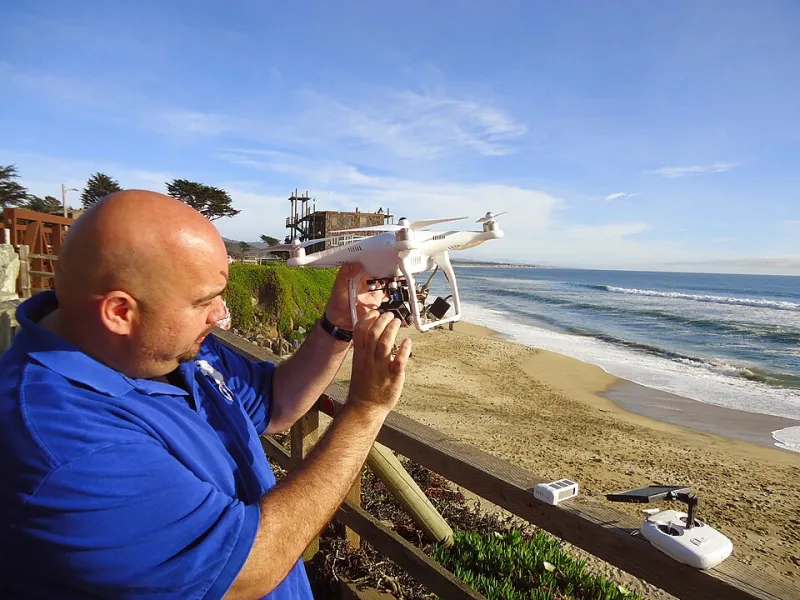
Photo: commercial drone pilot reviewing FAA regulations documents, via 7esl.com
Beyond the Basic Certificate: The Regulatory Gaps That Leave Part 107 Pilots Exposed
Passing the FAA's Aeronautical Knowledge Test and receiving a Part 107 Remote Pilot Certificate is a genuine professional milestone. The process demands real study, and the credential carries legitimate weight with clients who understand the regulatory landscape. The problem is that many clients—and more than a few operators—dramatically overestimate what that certificate actually authorizes.
Part 107 establishes a baseline: you may operate an unmanned aircraft system (UAS) weighing under 55 pounds, within visual line of sight, during daylight or civil twilight hours, below 400 feet above ground level, in uncontrolled airspace or controlled airspace with proper authorization. That framework covers a meaningful range of photography, videography, and basic inspection work. It does not cover the operations where the most significant commercial revenue is increasingly concentrated.
The Agricultural Spraying Problem
Precision agriculture represents one of the fastest-growing drone market segments in the United States, and chemical application—herbicides, fungicides, pesticides—sits at the center of that growth. Operators entering this space with only a Part 107 certificate are walking into serious regulatory exposure.
The application of pesticides from any aircraft, including UAS, is governed by the Federal Insecticide, Fungicide, and Rodenticide Act (FIFRA), administered by the EPA, and by individual state departments of agriculture. Most states require a licensed commercial pesticide applicator—a credential that demands its own examination, continuing education, and in some states, a separate UAS-specific endorsement. Several states additionally require operators to register as agricultural aircraft operators with their state aviation authority.
FAA Part 137, which governs agricultural aircraft operations for manned aircraft, has historically applied to UAS operating under certain conditions as well, though regulatory interpretation continues to evolve. Operators who accept payment for agricultural spray work without confirming their state-level pesticide licensure status are not operating in a gray area—they are operating in a clearly unauthorized one, regardless of what their Part 107 card says.
Powerline and Transmission Corridor Inspections
Electric utility inspection is another high-revenue vertical where Part 107 alone is demonstrably insufficient for many contract types. Routine distribution line inspections at low altitude in rural uncontrolled airspace may fall within standard Part 107 parameters. But transmission corridor inspections—particularly those involving flight near or along structures that approach or exceed 400 feet, operations in controlled airspace near substations, or work requiring flight beyond the operator's unaided visual line of sight—require additional authorizations that many operators have not secured.
Beyond-Visual-Line-of-Sight (BVLOS) operations require either a specific FAA waiver under 14 CFR 107.200 or, increasingly, operation under an approved BVLOS ARC framework or type-certificated UAS platform. The FAA has issued BVLOS waivers, but the application process is rigorous, approval is not guaranteed, and waivers are operation-specific—meaning a waiver for one corridor does not automatically extend to a different route or mission profile.
Utility companies that have experienced insurance claims or regulatory scrutiny are increasingly auditing their drone contractor base. Operators who cannot produce the correct documentation for the specific work being performed face contract termination and potential liability exposure if an incident occurs.
Night Operations, Moving Vehicles, and Waiver Requirements
The 2021 Remote ID rule and subsequent FAA rulemakings have clarified some previously ambiguous areas while creating new compliance requirements. Night operations—once requiring a waiver—are now permitted under Part 107 with appropriate anti-collision lighting. However, operations over moving vehicles, operations over people, and operations in certain controlled airspace categories still require either specific waivers or FAA-Authorized UAS Network (LAANC) authorization, which itself carries conditions that operators must actively manage.
The waiver system is not a formality. Applications require detailed safety case documentation, and the FAA evaluates them against specific risk thresholds. Operators who assume that a previously issued waiver covers a modified mission profile, or that a colleague's waiver is transferable, are compounding their exposure.
Liability and Insurability Consequences
The insurance dimension of this discussion is where the financial stakes become immediate. Most commercial UAS insurance policies include warranty clauses requiring the insured to be operating in compliance with all applicable regulations at the time of a covered event. An operator conducting agricultural spray work without the required pesticide applicator license, or flying BVLOS without a valid waiver, may find that a claim arising from that operation is denied entirely—regardless of the premium paid.
Brokers who specialize in aviation and UAS coverage are increasingly requesting documentation of all applicable authorizations, not merely the Part 107 certificate, as part of the underwriting process. Operators who cannot produce that documentation may find coverage unavailable or priced prohibitively.
Building a Defensible Authorization Stack
The practical path forward begins with an honest audit of every revenue operation in your current or planned portfolio. For each mission type, the relevant questions are: What federal regulations apply beyond Part 107? What state and local requirements apply in the jurisdictions where the work is performed? Does my current insurance policy cover this specific operation, and have I provided my carrier with full documentation?
For agricultural operators, the immediate priority is confirming pesticide applicator licensure in every state where spray work is conducted. For inspection operators pursuing BVLOS contracts, the priority is either developing a credible FAA waiver application or partnering with a platform provider whose aircraft carries the necessary type certificate or operational approval.
Part 107 is the starting point of a commercial drone operator's regulatory identity—not the finish line. The operators building durable, insurable, and scalable businesses are the ones who have mapped every gap between their certificate and their revenue model, and filled each one deliberately.