Shared Space, Shared Risk: Confronting the Collision Crisis in Autonomous Air and Ground Operations
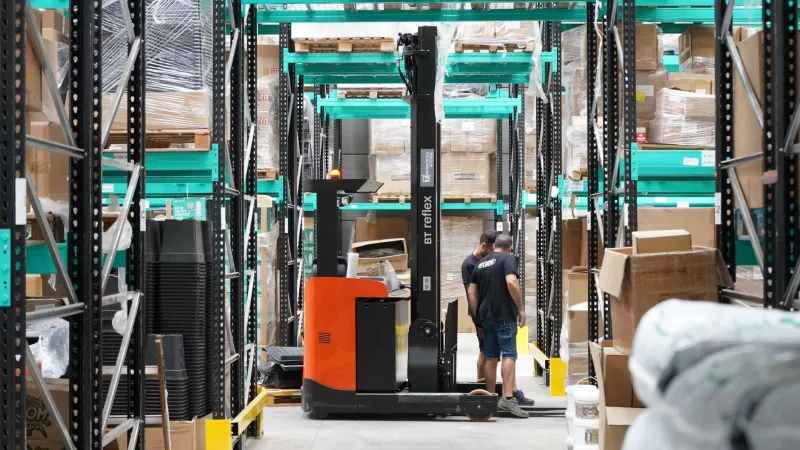
For decades, aviation safety professionals and industrial engineers occupied separate professional worlds. One community worried about midair conflicts at altitude; the other focused on floor-level hazards in warehouses and manufacturing plants. Autonomous technology has collapsed that boundary entirely. Today, a single large distribution center may host aerial inventory drones navigating overhead lanes while autonomous mobile robots (AMRs) traverse the floor below—often without any unified awareness of each other's position, speed, or intent.
The consequences of getting this wrong are not abstract. Collision events involving autonomous systems carry financial, operational, and legal weight that few organizations have fully priced into their deployment strategies. Understanding where the risks concentrate, why current regulations leave dangerous gaps, and what practical countermeasures exist is no longer optional for serious operators.
Where Collisions Actually Happen
The collision problem manifests across three distinct operational theaters, each with its own dynamics.
Drone-to-drone conflicts occur most frequently in environments where multiple UAVs operate simultaneously without a centralized traffic management layer. Agricultural operations running several survey drones across adjacent field sections, construction sites coordinating inspection flights from different contractors, and public safety agencies deploying multiple platforms during a single incident are all vulnerable. Without shared positional data and defined separation protocols, proximity alerts arrive too late—or not at all.
Drone-to-manned aircraft conflicts remain the most legally consequential category. The FAA has documented thousands of reported drone sightings near manned aircraft annually, with a meaningful percentage occurring below 1,200 feet AGL—precisely the altitude band where commercial drone operations concentrate. Near-airports and approach corridors present the highest density of risk, but low-altitude conflicts also occur in rural and industrial corridors where agricultural aircraft, helicopter utility operations, and emergency medical services fly without expecting UAV traffic.
Ground-level robot conflicts represent the fastest-growing exposure category as warehouse and manufacturing automation accelerates. When aerial drones descend into shared floor-level airspace—for charging, payload exchange, or close-range inspection—they enter the operating envelope of forklifts, AMRs, and human workers simultaneously. The collision geometries in these environments are complex: a descending drone moving at moderate speed intersects with a laterally moving AMR that has no upward-facing sensor suite and no awareness that anything is above it.
The Regulatory Gap No One Is Closing Fast Enough
Federal aviation regulation, as it currently exists, was not designed for the multi-system operational environment described above. FAA Part 107 governs individual commercial drone operations but does not establish frameworks for coordinating simultaneous multi-drone missions or for integrating aerial operations with ground robotics systems. The FAA's Unmanned Aircraft System Traffic Management (UTM) initiative has made meaningful progress toward low-altitude airspace coordination, but implementation remains uneven and voluntary participation is inconsistent.
OSHA's jurisdiction covers ground-level robotics safety in industrial settings, but its standards were developed for fixed automation and early-generation mobile systems—not for aerial-ground hybrid environments where the hazard geometry changes in three dimensions. The result is a regulatory seam: two agencies with adjacent but non-overlapping authority, and a rapidly evolving operational reality that falls squarely between them.
Industry standards bodies, including ASTM International and the Association for Unmanned Vehicle Systems International (AUVSI), are developing guidance documents, but voluntary standards carry no enforcement weight and adoption is inconsistent across the operator community. Liability in the event of a collision—particularly one involving property damage, injury, or interference with manned aviation—will likely be adjudicated through existing negligence frameworks, placing the burden squarely on operators to demonstrate that reasonable precautions were taken.
Detection Technologies Closing the Awareness Gap
The most immediate technical lever available to operators is improved situational awareness. Several detection technology categories have matured sufficiently for operational deployment.
Detect-and-avoid (DAA) systems designed for drone-to-drone and drone-to-aircraft conflict detection now exist at price points accessible to commercial operators. These systems combine onboard sensors—typically radar, acoustic arrays, or computer vision—with communication links that broadcast position and velocity data to nearby equipped aircraft. ADS-B receivers, while originally designed for manned aviation, are increasingly integrated into commercial UAV platforms and provide awareness of transponder-equipped manned traffic. The limitation is coverage: ADS-B only detects equipped aircraft, and many low-altitude general aviation operations, particularly agricultural and helicopter services, fly without ADS-B Out in certain airspace classes.
Upward-facing sensor integration for AMRs is an emerging design consideration that most current-generation ground robots lack. Retrofitting existing AMR fleets with ultrasonic or lidar sensors oriented toward the vertical plane enables detection of descending drones before contact occurs. Several robotics integrators are beginning to offer this as an add-on capability, though it requires software integration with the AMR's existing navigation stack.
Centralized fleet management platforms capable of ingesting position data from both aerial and ground systems represent the most comprehensive solution. These platforms create a unified operational picture, enforce virtual separation buffers, and can trigger automated holds or rerouting when conflict geometries develop. The challenge is interoperability: drone fleet management systems and AMR fleet management systems are typically developed by different vendors with different data architectures, and integration requires deliberate engineering effort.
Practical Strategies Operators Can Implement Now
Waiting for regulatory clarity or universal technology adoption is not a defensible risk management posture. Several concrete measures are available today.
Define and enforce physical separation zones. In mixed-use industrial facilities, designating specific vertical corridors for drone transit—and prohibiting AMR and human traffic beneath active drone lanes—reduces conflict probability without requiring advanced technology. Clear floor markings, overhead signage, and operational protocols enforced through site management are low-cost starting points.
Implement pre-mission coordination protocols. In multi-operator environments, requiring all drone and ground robot operators to register planned missions against a shared schedule—even a simple shared calendar—creates awareness of concurrent operations and allows manual conflict identification before systems are in motion.
Specify DAA capability in procurement. Organizations purchasing new drone platforms or AMR systems should include detect-and-avoid capability and inter-system communication compatibility as explicit procurement requirements. Vendors who cannot meet these specifications should be evaluated accordingly.
Conduct tabletop collision scenario exercises. Formal scenario planning—mapping out how a collision event would unfold, who bears liability, how operations would be suspended, and how the incident would be reported—prepares organizations to respond effectively and surfaces procedural gaps before an actual event occurs.
Review insurance coverage explicitly for multi-system operations. Standard commercial drone liability policies and general commercial property policies may not clearly address liability arising from drone-AMR or drone-manned aircraft collision events. Operators should engage their brokers to confirm coverage terms and identify any gaps requiring endorsements or supplemental policies.
The Stakes Are Higher Than Most Operators Acknowledge
The autonomous technology sector is at an inflection point. Deployment volumes are rising faster than safety frameworks, and the operational environments being targeted—dense warehouses, active construction sites, complex agricultural landscapes—are precisely the settings where collision risk is highest. Organizations that treat collision avoidance as a secondary concern, addressed only after a regulatory mandate forces action, are accepting liability exposure that is both foreseeable and preventable.
The good news is that the tools to manage this risk meaningfully already exist. Detection technologies are deployable now. Operational protocols can be established without waiting for federal rulemaking. And the professional discipline required to coordinate multi-system operations is well within the capability of organizations already managing complex autonomous deployments.
The collision problem is not inevitable. It is a design and management challenge—one that the autonomous technology community has both the tools and the obligation to take seriously.