Coverage Left Behind: How Advanced Drone Capabilities Are Outrunning the Policies Meant to Protect Them
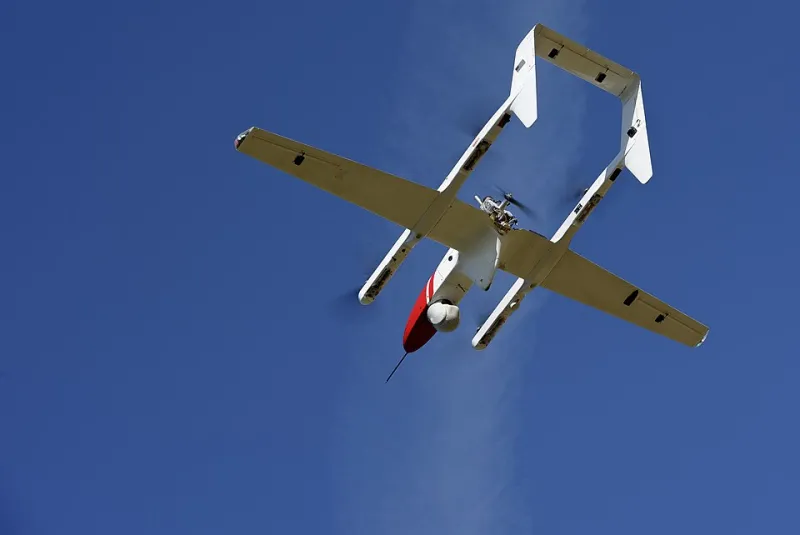
Photo: NASA Ames Research Center / Don Richey, Public domain, via Wikimedia Commons
The Widening Gap Between Technology and Protection
In almost every other sector of commercial technology, insurance products evolve alongside the tools they cover. Drone operations have proven to be a conspicuous exception. The commercial unmanned aircraft systems market has advanced at a pace that underwriters, many of whom still rely on frameworks developed during the early Part 107 era, have struggled to match. The result is a growing population of operators who believe they are fully protected when, in practice, their coverage reflects equipment and operating profiles that no longer describe what they actually fly.
This is not a theoretical concern. When a claim is filed, insurers examine the specific capabilities being deployed at the time of an incident. If those capabilities were never disclosed during the underwriting process—or if the policy language predates the technology involved—carriers have legitimate grounds to reduce or deny payment. For operators who have upgraded hardware, added payload systems, or expanded their operational envelope, the question is not whether gaps exist. The question is how large those gaps are.
What Underwriters Are Still Getting Wrong
Traditional drone insurance policies were structured around relatively simple assumptions: a single aircraft, a fixed sensor configuration, a pilot operating within visual line of sight, and a defined geographic area. Each of those assumptions has been eroded by the current generation of commercial equipment.
AI-assisted flight systems present a particular challenge. When an autonomous decision made by an onboard algorithm contributes to an incident, liability questions become considerably more complex than they are for manually flown operations. Some policy language assigns fault exclusively to the named operator, which may not accurately reflect the causal chain when machine learning systems are influencing flight behavior. Operators using platforms with advanced autonomy features should ask their brokers directly whether the policy addresses AI-assisted navigation—and request written clarification if the answer is ambiguous.
Multi-sensor payload configurations introduce a second category of exposure. A drone carrying a thermal imager, a LiDAR unit, and a standard optical camera is not the same risk profile as one carrying a single RGB sensor. The payload affects weight, flight dynamics, and the nature of the data being collected. If a sensor failure contributes to an incident, or if collected data is later implicated in a privacy or liability claim, the policy needs to address the specific payload in use. Many do not.
Extended beyond-visual-line-of-sight operations, even those conducted under a valid FAA waiver, occupy a gray area in most standard policies. Insurers who have not explicitly underwritten BVLOS risk may dispute whether coverage applies to incidents occurring outside the pilot's direct visual range, regardless of whether the operation was legally authorized.
Identifying Underinsured Operations Before a Claim Forces the Issue
The most effective way to identify coverage gaps is to conduct a systematic comparison between current operational capabilities and the language of existing policies. This exercise is best approached with a broker who has direct experience in commercial UAS coverage rather than a general aviation specialist who has added drones as a secondary product line.
Start by documenting every significant change made to the operation since the policy was last written or renewed. This includes hardware upgrades, new payload systems, expanded geographic operating areas, any FAA waivers obtained, and changes to how data collected during flights is used or sold. Each of these changes represents a potential disclosure obligation that, if unmet, can compromise a future claim.
Next, examine the policy's definitions section carefully. Terms like "unmanned aircraft," "payload," "autonomous operation," and "pilot in command" may be defined in ways that do not align with how the operation actually functions. A policy that defines the pilot in command as the individual maintaining continuous manual control, for example, may create ambiguity when applied to a flight conducted with significant autopilot involvement.
Finally, review the exclusions. Many drone policies contain exclusions for experimental operations, modified aircraft, or flights conducted outside manufacturer specifications. If any aspect of normal operations could be characterized as falling into one of these categories, that exclusion warrants a direct conversation with both the broker and the carrier.
Negotiating Coverage That Reflects Reality
Insurance is a negotiated product, and operators with strong safety records and well-documented operational procedures are in a better position to negotiate than they may realize. Carriers competing for commercial UAS business have shown willingness to extend coverage for advanced capabilities when operators can demonstrate that those capabilities are being managed responsibly.
Documentation is the foundation of that negotiation. Operators who maintain detailed flight logs, incident reports, maintenance records, and pilot training histories give underwriters the data they need to assess risk accurately. Vague or incomplete records, by contrast, force underwriters to apply conservative assumptions that result in either exclusions or inflated premiums.
When seeking coverage for specific advanced capabilities, be explicit in the application. Describe AI-assisted navigation systems by name and version. List every sensor in the payload configuration. Provide copies of any FAA waivers currently held. If the operation involves data commercialization, describe how that data is stored, transmitted, and licensed. The more precisely the underwriter understands the operation, the less room there is for disputes about coverage scope when a claim arises.
Operators who have been with the same carrier for several years should also consider whether that relationship has kept pace with their operational evolution. Loyalty to a carrier that has not updated its UAS products is not a virtue if the result is inadequate protection.
The Cost of Waiting
There is a persistent tendency among commercial drone operators to treat insurance as a compliance checkbox rather than a risk management instrument. That approach works until it doesn't. A single uninsured or underinsured incident—a collision with infrastructure, a payload failure over a populated area, a data breach involving collected imagery—can produce financial exposure that exceeds the value of the entire fleet.
The technology in commercial drone operations today is genuinely impressive. The insurance coverage protecting that technology, in too many cases, is not. Closing that gap requires deliberate effort, but it is effort that pays for itself the first time a claim is filed and paid in full.