Operating at the Edge: What Commercial Drone Pilots Need to Know Before Pushing Manufacturer Limits

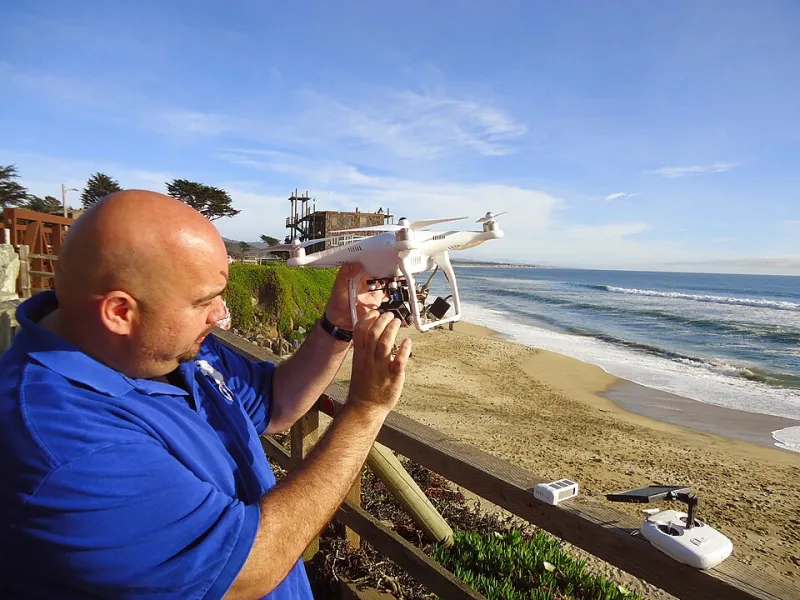
Photo: commercial drone pilot field testing wind conditions data logging tablet, via wallpaperbat.com
The Gap Between Published Specs and Operational Reality
Every commercial drone manufacturer publishes a set of performance specifications: maximum wind resistance, operational temperature range, maximum altitude above sea level, payload capacity, and recommended battery parameters. These figures are not arbitrary. They reflect the manufacturer's determination of the conditions under which the aircraft will perform reliably across the full range of operators who might fly it—including those with minimal experience, using poorly maintained equipment, in conditions that were never precisely measured.
For experienced commercial operators flying well-maintained aircraft in carefully characterized conditions, those conservative margins frequently leave meaningful operational capability on the table. A platform rated for 25-mph winds may perform predictably at 28 mph in the hands of an experienced pilot who has observed its behavior at the boundary and knows what early instability looks like. A battery rated for use down to 32°F may sustain acceptable discharge performance at 28°F when pre-warmed according to a documented protocol.
The question is not whether these margins exist. They do. The question is how to explore and document them in a way that remains legally defensible when a regulator, an insurer, or an opposing attorney later scrutinizes the operation.
Understanding the Regulatory Framework for Non-Standard Operations
The FAA's Part 107 framework grants the remote pilot in command broad authority to make operational decisions—and places correspondingly broad responsibility on that pilot for the outcomes of those decisions. The regulations do not prohibit operating in conditions beyond manufacturer recommendations in most cases. What they do require is that the pilot determine the aircraft is in a condition for safe flight before each operation, and that the operation comply with applicable airspace and operational rules.
This creates a defensible space for experienced operators, but it is not unlimited. Modifications that alter the aircraft's registered configuration—changes to the airframe, propulsion system, or flight controller in ways that affect performance—may trigger additional regulatory obligations, particularly if the aircraft holds a Remote ID module or was authorized under a specific waiver. The distinction between adjusting operational parameters within a stock configuration and modifying the aircraft itself is significant, and operators who conflate the two risk creating compliance problems that extend well beyond the immediate flight.
For operations conducted under FAA waivers—BVLOS, operations over people, night operations—the waiver application itself defines the operational parameters the FAA has approved. Operating outside those parameters, even in conditions that appear safe, constitutes a waiver violation with potentially serious enforcement consequences. The conservative approach is to treat waiver parameters as firm limits and reserve any boundary-testing for operations conducted under standard Part 107 authority.
The Role of Documentation in Legal Defensibility
If an incident occurs during an operation that involved non-standard conditions or performance parameters, the operator's documentation will determine whether the FAA and any civil litigants treat the operation as a professionally managed risk assessment or as reckless disregard for established limits.
Effective documentation for boundary-condition operations begins well before the flight. A written pre-flight risk assessment should identify each parameter that deviates from manufacturer recommendations, explain the basis for concluding that the deviation is acceptable in the specific conditions, and describe the mitigation measures in place. This document should be signed by the pilot in command and retained with the flight records.
The risk assessment should draw on observable data rather than general experience. If the operation will occur in wind conditions above the manufacturer's rated maximum, the assessment should reference specific anemometer readings taken at the operating site, the pilot's documented experience with the aircraft at comparable wind speeds, and any prior test flights conducted to characterize performance at the boundary. General statements like "conditions appeared acceptable" provide minimal protection. Specific, dated, measured data provides considerably more.
Post-flight documentation is equally important. After any operation that tested performance boundaries, a brief written record of observed aircraft behavior—telemetry data, battery performance, flight controller log review—creates an evidence base that supports future operations and demonstrates ongoing, systematic risk management.
Firmware, Custom Parameters, and the Modification Line
Many commercial drone platforms allow operators to adjust flight controller parameters: attitude limits, maximum velocity settings, return-to-home behavior, and battery warning thresholds. Adjusting these parameters within the manufacturer's provided software interface is generally considered configuration rather than modification. It does not typically alter the aircraft's registered status or void the manufacturer's warranty in ways that affect insurance coverage, though operators should verify this with both their manufacturer and their broker before making significant changes.
Custom firmware presents a categorically different situation. Installing third-party firmware or modifying manufacturer firmware removes the aircraft from the operational profile it was certified and insured under. Insurers who discover that an aircraft involved in an incident was running non-manufacturer firmware have strong grounds to dispute coverage, particularly if the firmware change can be connected causally to the incident. The evidentiary standard is not proof of causation—it is the insurer's ability to argue that the modification introduced an unquantified risk that was not disclosed during underwriting.
For operators who have legitimate technical reasons to explore firmware modifications—research and development contexts, specialized industrial applications, or academic partnerships—the appropriate path involves separate coverage obtained specifically for experimental operations, explicit disclosure to the carrier, and physical separation between modified and production aircraft. Mixing modified and production equipment in a single fleet, under a single policy, without explicit carrier knowledge, is an underwriting disclosure problem that can compromise coverage across the entire fleet.
Building a Testing Protocol That Holds Up to Scrutiny
Operators who want to systematically characterize their aircraft's real-world performance envelope—as opposed to simply flying beyond specs and hoping for the best—should develop a structured testing protocol that produces defensible data.
This means designating specific test conditions: a known, cleared site; measured environmental conditions; a defined set of parameters to evaluate; a data recording procedure; and a threshold beyond which the test is terminated. It means conducting tests incrementally rather than jumping to extreme conditions. And it means maintaining the test records with the same rigor applied to production flight logs.
A well-documented testing program serves multiple purposes. It provides the operator with genuine, empirically grounded knowledge of the aircraft's capabilities. It creates a documented basis for the operational decisions made during production flights. And it demonstrates to regulators and insurers that the operator approaches non-standard operations as a professional discipline rather than an improvised gamble.
The manufacturers' specifications are a starting point, not a ceiling. But the space between that starting point and the actual performance boundary belongs to operators who have earned the right to occupy it through systematic, documented, professionally managed practice.