Paying Full Price for Half a Fix: The Commercial Drone Warranty Illusion and How to Fight Back
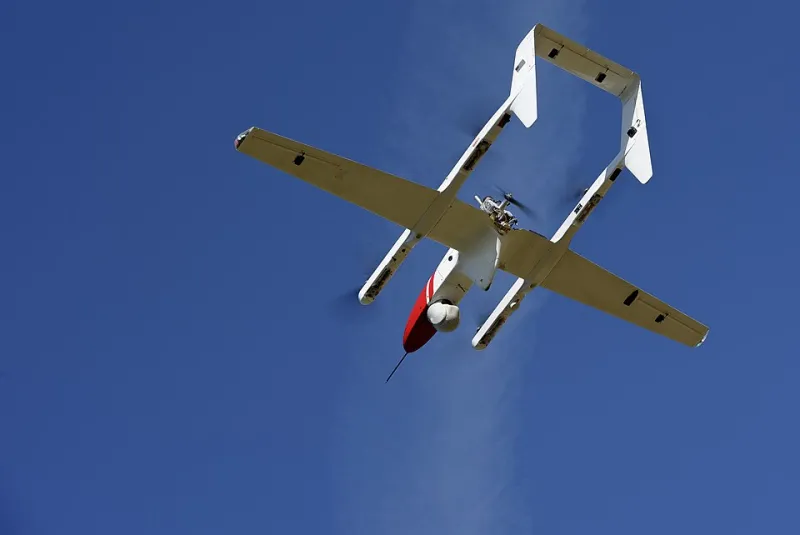
Photo: Benoît Prieur, CC0, via Wikimedia Commons
For many commercial drone operators, the warranty card tucked into a new aircraft's packaging feels like a safety net. It is, in practice, more often a trap—one engineered with enough ambiguity to ensure that the most common and costly repairs fall just outside its boundaries. Understanding how that trap is constructed, and how to dismantle it, is no longer optional for operators running serious commercial fleets.
The Architecture of Intentionally Narrow Coverage
Most commercial drone warranties in the US market follow a recognizable pattern: twelve to twenty-four months of coverage for manufacturing defects, with language that excludes damage caused by "operator error," "environmental conditions," "signal interference," and "use outside of manufacturer specifications." On paper, these exclusions seem reasonable. In practice, they are broad enough to encompass nearly every failure mode a working drone is likely to encounter.
Consider a gimbal assembly that develops a calibration fault after six months of regular use. The manufacturer's service center may classify the failure as wear-and-tear rather than a manufacturing defect—a distinction that shifts the repair cost entirely to the operator. The same logic applies to battery management systems, ESC failures, and even firmware-related sensor malfunctions. Each of these categories sits in an interpretive gray zone where the manufacturer, not the operator, holds the definitional authority.
This is not accidental. Warranty language is drafted by legal teams with access to years of field failure data. The exclusions are calibrated to cover the scenarios least likely to occur, while leaving the most probable failure modes exposed.
The Service Center Monopoly Problem
Compounding the coverage gap is the structure of authorized repair networks. Most major commercial drone manufacturers in the US market operate either proprietary service centers or tightly controlled networks of authorized repair facilities. Operators who use independent technicians—even highly qualified ones—risk voiding whatever warranty coverage remains on their aircraft.
This creates a captive market. Authorized service centers, insulated from competitive pricing pressure, routinely charge rates that bear little relationship to the actual cost of parts and labor. Operators in rural or underserved markets face the additional burden of shipping aircraft to distant facilities, incurring both transit costs and extended downtime that may be more financially damaging than the repair itself.
The monopoly dynamic also creates perverse incentives around repair recommendations. When a service center profits from parts replacement rather than component-level repair, the economic logic favors recommending broader interventions than the failure strictly requires. Operators rarely have the technical standing to contest these assessments.
Documenting Your Way to a Stronger Position
The most effective countermeasure available to commercial operators is rigorous, systematic maintenance documentation. Warranty disputes are resolved on the basis of evidence, and operators who maintain detailed flight logs, pre- and post-flight inspection records, and service histories are substantially better positioned to contest denial decisions.
Specifically, operators should maintain records that establish:
- Operating environment conditions at the time of each mission, including temperature, humidity, and wind data drawn from weather services or onboard telemetry
- Flight parameter compliance, demonstrating that the aircraft was operated within published performance envelopes
- Maintenance intervals, showing that recommended service schedules were followed with precision
- Component provenance, confirming that replacement parts used during the warranty period were manufacturer-approved
This documentation serves a dual purpose. It supports warranty claims when failures occur, and it builds the factual record necessary to escalate disputes through manufacturer complaint processes or, when warranted, consumer protection channels.
Negotiating Before You Sign
The most overlooked opportunity in commercial drone procurement is the window between purchase agreement and delivery—a period during which warranty terms are, in many cases, negotiable. Fleet buyers, in particular, have meaningful leverage that they routinely fail to exercise.
Operators acquiring three or more aircraft should approach warranty terms as a contractual negotiation, not a take-it-or-leave-it condition. Specific provisions worth pursuing include:
- Extended coverage periods tied to fleet size or annual service spend
- Defined response time guarantees for authorized service center turnaround
- Loaner aircraft provisions for warranty repairs exceeding a specified duration
- Explicit coverage definitions that narrow the interpretive latitude manufacturers currently enjoy
- Independent inspection rights, allowing a qualified third-party technician to assess failures before a warranty determination is made
Manufacturers with serious commercial ambitions—and most major players in the US market qualify—have strong incentives to retain large fleet customers. That incentive is the operator's primary source of negotiating leverage, and it should be deployed deliberately.
Extended Service Agreements: Reading the Fine Print Twice
Many manufacturers now offer extended service plans marketed as comprehensive protection beyond the base warranty period. These products deserve scrutiny before purchase. Extended plans frequently replicate the same exclusion structures as the base warranty, adding coverage years without meaningfully expanding coverage scope.
Before purchasing any extended service agreement, operators should request a side-by-side comparison of covered failure categories under the base warranty versus the extended plan. If the extended plan does not explicitly add coverage for the failure modes most likely to affect a working aircraft—motor wear, controller board degradation, camera system calibration drift—it may represent poor value relative to a self-funded repair reserve.
Turning a Cost Center Into a Business Line Item
The operators who fare best in warranty disputes are those who treat warranty management as a discrete operational function rather than an administrative afterthought. Assigning responsibility for warranty tracking, documentation, and claim management to a specific team member—or building it into an operations management system—converts an unpredictable cost center into a manageable and negotiable business expense.
For larger commercial operations, warranty performance data across a fleet can generate meaningful analytical insights: which aircraft models generate the most claims, which failure categories are most frequently disputed, and which service centers resolve claims most efficiently. That data, in turn, becomes the foundation for more informed procurement decisions and more effective manufacturer negotiations.
The warranty trap is real. But it is not inescapable. With the right documentation practices, procurement strategy, and negotiating posture, commercial drone operators can recover substantial value from coverage that manufacturers currently count on them to leave unclaimed.